
👁️✨
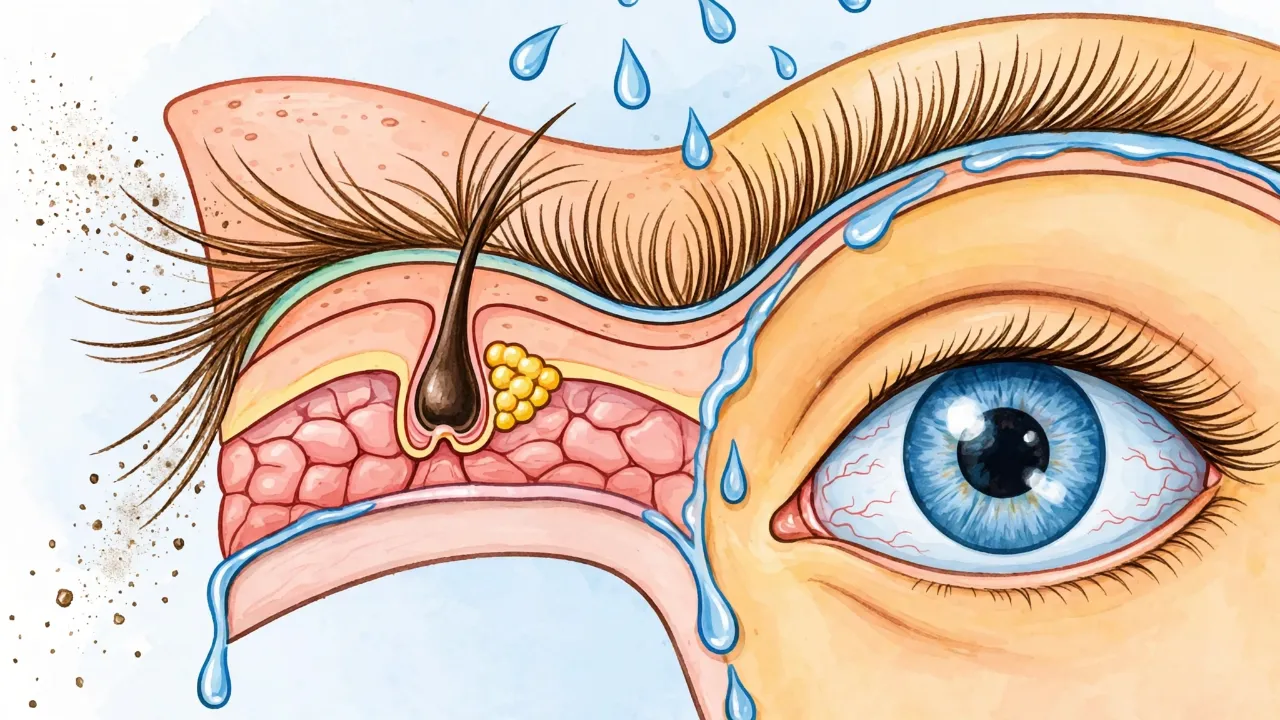
You have tiny hairs on your eyes! They are called eyelashes. 😊
Eyelashes keep dust and dirt out of your eyes. They are like little brooms! 🧹
Blink, blink! Your lashes help every time you blink. 👀
What Are Eyelashes For?
Eyelashes are the short, curved hairs along the edges of your eyelids. They look small, but they have a big job: protecting your eyes!
How Do They Protect You?
When dust or a tiny bug flies toward your eye, your eyelashes feel it first. They tell your brain, "Close the eyelid!" Your eye blinks shut before the dust gets in. It happens so fast you do not even think about it.
How Many Do You Have?
Most people have about 200 eyelashes on the top eyelid and about 100 on the bottom. That is around 300 tiny protectors for each eye! 👁️
Do Eyelashes Fall Out?
Yes! Like the hair on your head, eyelashes fall out and grow back. Each one lasts about 3 to 5 months. You might find one on your cheek. Some people make a wish on it! 🌟
Tiny Hairs, Big Job
Your eyelashes are some of the most important hairs on your body, even though they are some of the smallest. Each eyelash is only about 8 to 12 millimeters long (about the width of your pinky fingernail), but together they form a defense system that protects your most delicate organ: your eyes.
Three Ways Eyelashes Protect You
- Dust catchers: Eyelashes trap dust, pollen, sand, and other tiny particles before they can land on your eyeball. They work like a net stretched across the opening of your eye.
- Blink triggers: When something touches your lashes, nerves at the base send a signal to your brain at incredible speed. Your eyelids snap shut in about 100 milliseconds, which is faster than you can snap your fingers!
- Airflow shields: Scientists discovered that eyelashes redirect airflow around the eye, creating a thin layer of still air over the eye's surface. This slows down evaporation and keeps your eyes from drying out.
The Life of an Eyelash
Each eyelash goes through three stages:
- Growing phase (anagen): The lash actively grows for about 30 to 45 days
- Resting phase (catagen): The lash stops growing and the follicle shrinks, lasting about 2 to 3 weeks
- Shedding phase (telogen): The lash falls out and a new one starts growing in its place
Because your lashes are all at different stages, you never lose them all at once. You lose about 1 to 5 eyelashes per day without noticing!
Animals and Their Lashes
Humans are not the only animals with eyelashes. Camels have extra-long, thick lashes to protect against desert sandstorms. Cows have beautiful long lashes too. Horses, dogs, and even elephants have eyelashes. But not all animals need them: fish do not have eyelashes because water already protects their eyes, and birds have special clear eyelids called nictitating membranes that do the same job.
The Aerodynamics of Eyelashes
In 2015, a research team at the Georgia Institute of Technology published a study in the Journal of the Royal Society Interface that revealed something unexpected: eyelashes are not just passive dust barriers. They are aerodynamic structures that actively manipulate airflow.
The researchers measured eyelash lengths across 22 mammalian species, from humans to hedgehogs to snow leopards. The finding was remarkably consistent: eyelash length across almost all species converges to approximately one-third of the eye's width. This ratio is not coincidental. It is an evolutionary optimum.
The team confirmed this using a wind tunnel with a model eye (an aluminum dish filled with water to simulate the tear film). Synthetic lashes of varying lengths surrounded the dish. They measured evaporation rate and particle deposition at different lash lengths and found that the one-third ratio minimized both simultaneously.
Eyelash Anatomy
An eyelash is not just a simple hair. Each lash grows from a follicle embedded about 1.5 to 2mm deep in the eyelid. The follicle is surrounded by:
- Sebaceous glands (glands of Zeis): Produce an oily substance that coats the lash, keeping it flexible and water-resistant
- Apocrine sweat glands (glands of Moll): Modified sweat glands whose exact function is still debated, though they may contribute to antimicrobial defense
- Nerve endings: Mechanoreceptors at the follicle base detect displacement as small as 0.1mm, triggering the blink reflex
The upper eyelid contains 5 to 6 rows of lashes (approximately 150 to 200 individual hairs), while the lower lid has 3 to 4 rows (75 to 100 hairs). Upper lashes curve upward and outward; lower lashes curve downward. This curvature is structural, determined by the shape of the follicle, not by gravity or styling.
Average eyelash growth: ~0.12 to 0.14 mm/day
Anagen (active growth) phase: ~30 to 45 days
Maximum length: 0.13 mm/day × 40 days ≈ 5.2 mm
But actual length averages 8-12 mm because growth rates are not constant and vary by individual.
Compare to scalp hair: ~0.35 mm/day with an anagen phase of 2 to 7 years!
This is why head hair grows long but eyelashes stay short: shorter growth phase, not slower growth rate.
The Blink Reflex
The eyelash-triggered blink is one of the fastest reflexes in the human body. The reflex arc travels from mechanoreceptors in the lash follicles → through the ophthalmic branch of the trigeminal nerve (cranial nerve V) → to the facial motor nucleus in the brainstem → through the facial nerve (cranial nerve VII) → to the orbicularis oculi muscle, which contracts to close the eyelid.
Total latency: approximately 30 to 50 milliseconds for the corneal reflex (touching the eye directly) and 80 to 100 milliseconds for the eyelash-mediated reflex. For comparison, a voluntary blink takes about 300 to 400 milliseconds. The reflex pathway bypasses conscious processing entirely, which is why you cannot keep your eyes open when something touches your lashes, no matter how hard you try.
Demodex: The Mites Living in Your Lashes
Here is something that will either fascinate or disturb you: microscopic mites called Demodex live in your eyelash follicles. Demodex folliculorum (0.3 to 0.4mm long) inhabits the follicle itself, and Demodex brevis (0.15 to 0.2mm long) lives in the sebaceous glands.
These mites are nearly universal in adults. Studies using microscopic examination of pulled lashes find Demodex in approximately 84% of people over age 60 and in essentially 100% of people over 70. They are transferred through face-to-face contact and shared pillows. They eat sebum (the oily secretion from the glands), are most active at night, and their entire lifecycle (egg to adult to death) takes about 14 to 16 days.
In most people, Demodex causes no symptoms. They are commensal organisms, living on you without helping or harming. However, in cases of immune suppression or overpopulation, they can cause demodicosis, characterized by itchy, inflamed eyelid margins. This is a recognized medical condition treated with tea tree oil or ivermectin.
Evolutionary Persistence of Eyelashes
Humans have lost most of their body hair over the past 1 to 3 million years, yet eyelashes, eyebrows, scalp hair, and a few other patches persist. The evolutionary pressures that retained eyelashes are well-supported: UV protection for the cornea, mechanical particle defense, and the aerodynamic evaporation reduction demonstrated by Amador et al. (2015). But eyelashes also serve a function that is harder to quantify: social signaling.
Cross-cultural studies consistently find that prominent eyelashes are perceived as attractive, particularly on female faces. This holds across populations with dramatically different beauty standards. The proposed evolutionary explanation is that eyelashes (and eyes generally) are honest signals of health: clear, well-protected eyes with full lashes indicate low parasite load, adequate nutrition during development, and hormonal normalcy (estrogen promotes lash growth, which is why female lashes tend to be longer than male lashes on average).
Trichomegaly and the Biology of Lash Length
Eyelash length is primarily determined by the duration of the anagen phase, which is genetically controlled. The key regulatory pathway involves Wnt/β-catenin signaling in the dermal papilla of the hair follicle. Mutations that extend the anagen phase produce trichomegaly (abnormally long eyelashes), which can be:
- Congenital: Rare genetic conditions (e.g., Oliver-McFarlane syndrome, Cornelia de Lange syndrome) that produce lashes exceeding 15mm
- Acquired: Certain medications, particularly prostaglandin analogs used for glaucoma treatment, cause lash hypertrichosis as a side effect
The prostaglandin connection led directly to the development of bimatoprost (marketed as Latisse), the only FDA-approved eyelash growth treatment. Bimatoprost is a prostaglandin F2α analog that extends the anagen phase and increases the percentage of follicles actively growing at any given time. Clinical trials showed a 25% increase in lash length, 106% increase in lash thickness, and 18% increase in darkness after 16 weeks.
The pharmacology is instructive: bimatoprost binds prostamide receptors in the dermal papilla, upregulating the expression of genes involved in melanogenesis (hence darker lashes) and extending the mitotic activity of matrix keratinocytes (hence longer and thicker lashes). The effect reverses completely upon discontinuation, which the cosmetics industry has noted with satisfaction.
Computational Fluid Dynamics of the Palpebral Fissure
The 2015 Georgia Tech study used both physical experiments and CFD simulations to model airflow around the eye. The palpebral fissure (the opening between the eyelids) creates a semi-enclosed cavity when the eye is open. Without lashes, air flows freely across the tear film, causing evaporation at a rate determined by ambient humidity and air velocity.
Lashes at the one-third optimal length create a porous boundary that does not block airflow entirely but reduces its velocity. The porosity of the lash array (approximately 40 to 60% open area, depending on lash density) acts as a flow resistor, analogous to a diffuser in HVAC systems. The result is a thin boundary layer of nearly stagnant air over the cornea, reducing shear stress on the tear film.
E = h_m × A × (C_s - C_∞)
where h_m = mass transfer coefficient (reduced by ~50% with optimal lash length),
A = exposed eye surface area,
C_s = water vapor concentration at the tear film surface,
C_∞ = ambient water vapor concentration
Particle deposition velocity:
v_d = v_s + v_t (sedimentation + turbulent deposition)
Lashes reduce v_t by dampening turbulent eddies at the eye opening.
Demodex: Commensal to Pathogen
The Demodex mite question illustrates a broader theme in human microbiome research: the boundary between commensal (harmless cohabitant) and pathogen is context-dependent, not intrinsic to the organism.
Demodex folliculorum lacks an anus. It accumulates waste internally throughout its 14-day lifespan, then ruptures upon death, releasing its contents into the follicle. In immunocompetent individuals with normal mite densities (fewer than 5 per follicle), the immune system clears this debris without incident. In immunosuppressed patients, or when mite populations exceed 5 per follicle, the released bacterial lipases and chitinase trigger a delayed-type hypersensitivity reaction, producing the clinical picture of anterior blepharitis.
In 2022, the FDA approved lotilaner (Xdemvy), the first prescription treatment specifically for Demodex blepharitis. It is an isoxazoline, the same drug class used in veterinary flea and tick medications (e.g., Bravecto). The drug paralyzes and kills Demodex by blocking gamma-aminobutyric acid (GABA) and glutamate-gated chloride channels in the mites' nervous system.
Why Your Kid Asked About Eyelashes
Children become fascinated by eyelashes for surprisingly consistent reasons: they found one on their cheek and were told to make a wish; they noticed in a mirror that their lashes are curved; someone told them eyelashes grow back; or they saw someone wearing false lashes and had questions. Whatever prompted it, this is one of those topics where the real science is stranger and more interesting than anything you could make up. Microscopic face mites? An engineering-optimal length ratio? A blink reflex faster than conscious thought? It is all there.
The Wish-on-an-Eyelash Tradition
The custom of wishing on a fallen eyelash appears across multiple cultures with no clear single origin. In English-speaking countries, the convention is to place the lash on a fingertip, close your eyes, make a wish, and blow. In Turkey, a fallen eyelash placed on the back of the hand and covered by the other hand grants a wish if it disappears. In India, some traditions hold that finding a lash on your cheek means someone is thinking of you.
The tradition likely arose because eyelash loss is visible (you notice it on your skin), infrequent enough to feel notable, and painless. That combination makes it a natural candidate for superstition: a small, random, harmless event onto which you can project meaning.
When to Actually Worry About Eyelashes
For the practical-minded parent, here is when eyelash issues warrant a doctor visit:
- Sudden significant lash loss (madarosis): Can indicate thyroid dysfunction (hypothyroidism), alopecia areata, or nutritional deficiency (particularly zinc and biotin). If your child is losing lashes in patches alongside other hair loss, see a dermatologist.
- Ingrown eyelashes (trichiasis): Lashes that curl inward and rub against the cornea. Causes tearing, redness, and discomfort. Common in children with epicanthal folds. Usually self-resolving by age 5 to 6 as the facial structure matures; if persistent, an ophthalmologist can remove the offending lash.
- Styes (hordeolum): Bacterial infection of a lash follicle, appearing as a painful red bump on the eyelid margin. Warm compresses (10 minutes, 3 to 4 times daily) resolve most styes within a week. Antibiotic drops only if the stye does not resolve or recurs frequently.
- Eyelash pulling (trichotillomania): Repetitive, compulsive pulling of lashes. If your child is actively pulling out their lashes, this is a recognized behavioral condition (classified as an obsessive-compulsive spectrum disorder in DSM-5-TR). Cognitive behavioral therapy, specifically habit reversal training, is the first-line treatment. It affects approximately 1 to 2% of the population, and onset peaks in two windows: ages 2 to 6 (often self-limited) and ages 11 to 13 (more persistent).
The Mascara Your Daughter Will Eventually Ask About
If you have a daughter approaching the tween years, mascara will eventually enter the conversation. Some perspective:
Modern mascara is a suspension of pigments (usually carbon black or iron oxides) in a wax and polymer base. The formula has not fundamentally changed since the 1960s. "Waterproof" formulas use hydrophobic waxes (beeswax, carnauba wax) that resist water but require oil-based removers, which can irritate the eyelid skin with repeated use. "Tubing" mascaras coat individual lashes in polymer tubes that slide off cleanly with warm water, are generally gentler on young skin, and do not flake.
The American Academy of Dermatology recommends replacing mascara every 3 months, as the warm, damp tube interior becomes a bacterial culture medium. Pink eye (bacterial conjunctivitis) outbreaks among teenagers are frequently traced to shared mascara.
The Engineering Lesson
If you want to extract maximum educational value from this topic, the Georgia Tech aerodynamics paper is a beautiful example of biomimicry research. The team proposed that their findings could inform the design of sensors, dust covers for solar panels, and air filtration systems. The principle that a porous boundary at one-third the opening width minimizes both evaporation and particle deposition is a general engineering result, not limited to eyes. It applies to any system where you want to protect a surface from environmental exposure while maintaining access to light and air.
Your child's eyelashes are, in a very real sense, a 200-million-year-old engineering solution that human designers are only now learning to copy.
Sources
- Amador, G.J. et al. "Eyelashes divert airflow to protect the eye." Journal of the Royal Society Interface 12(105), 20141294 (2015).
- Khong, J.J. et al. "Anatomy of the eyelashes." In: Eyelid and Conjunctival Tumors. Springer (2018).
- Lacey, N. et al. "Demodex mites: commensals, parasites, or mutualistic organisms?" Dermatology 225(2), 128-137 (2009).
- Smith, R.E. and Flowers, C.W. "Chronic blepharitis: a review." CLAO Journal 21(3), 200-207 (1995).
- Glaser, D.A. "The use of bimatoprost for eyelash growth." Dermatologic Therapy 24(4), 272-279 (2011).
- American Academy of Ophthalmology. "Eyelash Extensions: Recommendations and Safety." Clinical Statement (2023).
- Woods, D.W. and Houghton, D.C. "Diagnosis, evaluation, and management of trichotillomania." Psychiatric Clinics 37(3), 301-317 (2014).