
👃🌸
Your nose is on your face! It helps you breathe air in and out.
Your nose can smell things too. Cookies smell yummy! 🍪 Flowers smell nice! 🌷
Your nose also catches germs before they get inside you. Thank you, nose!
What Does Your Nose Do?
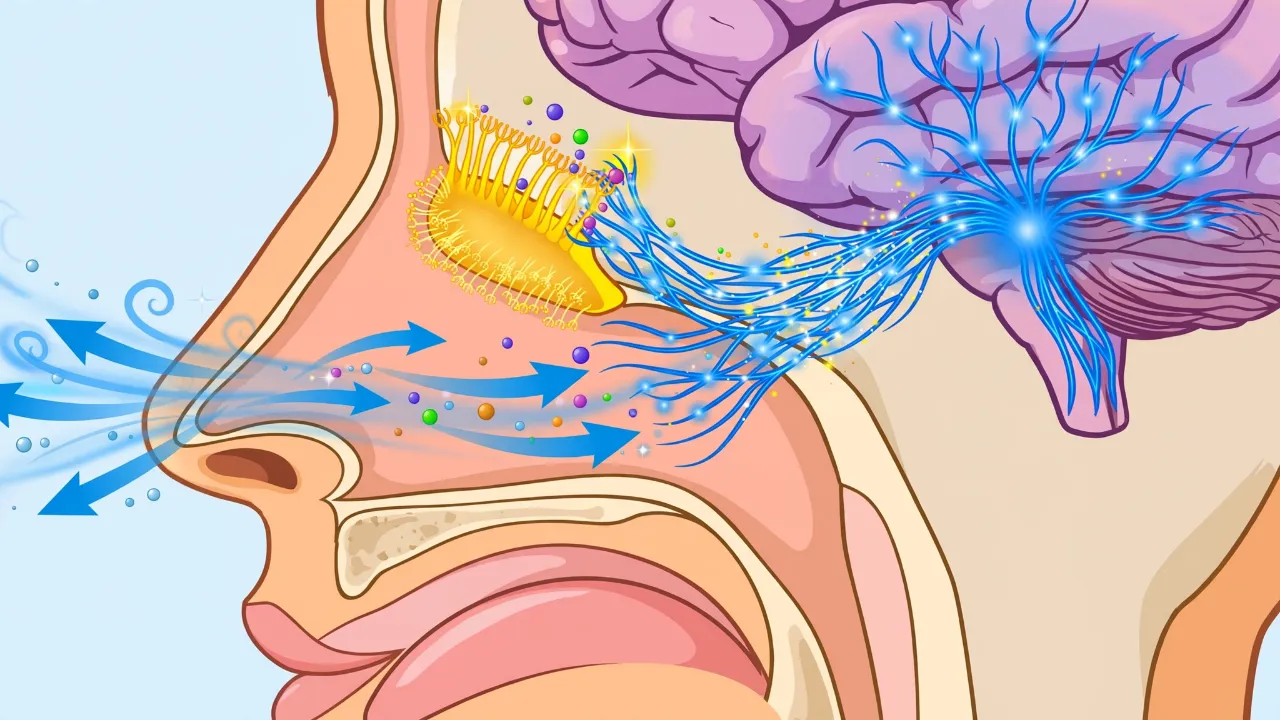
Your nose has two big jobs. First, it lets you breathe. Air goes in through your nostrils. Second, it lets you smell. Walk past a bakery, and your nose tells your brain, "Mmm, fresh bread!"
What Is Inside Your Nose?
Inside your nose are tiny hairs. They catch dust so it does not reach your lungs. Your nose also makes sticky stuff called mucus. You might call it "boogers." Mucus traps germs and keeps you healthy!
Why Does Your Nose Run?
When you have a cold, your nose makes extra mucus to wash the germs away. That is why it drips. It is helping you!
Fun Nose Fact!
You breathe through one nostril more than the other. They take turns every few hours! Cover one nostril and breathe, then switch. One side feels easier!
Your Nose: More Than Just a Bump on Your Face
Your nose is one of the busiest parts of your body. Every day, you take about 20,000 breaths, and every single one goes through your nose (unless you are a mouth-breather, which your dentist probably wants you to stop doing).
The Three Jobs of Your Nose
Job 1: Air Conditioner. Your nose warms up cold air before it reaches your lungs. It also adds moisture so the air is not too dry. That is why breathing through your nose feels different from breathing through your mouth on a cold day.
Job 2: Filter. Tiny hairs called cilia line the inside of your nose. They wave back and forth like little brooms, sweeping dust, pollen, and germs out before they reach your lungs. Mucus helps by trapping particles like flypaper.
Job 3: Smell Detector. Way up at the top of your nasal cavity, there is a patch of special cells called olfactory receptors. Humans have about 400 different types of these receptors. When smell molecules float up and land on them, they send signals to your brain. Your brain figures out what you are smelling in less than half a second.
Why Food Tastes Boring When You Are Sick
About 80% of what you think of as "taste" is actually smell. When your nose is stuffed up, the smell molecules cannot reach your olfactory receptors. That is why food seems bland when you have a cold. Your tongue can only detect five basic tastes: sweet, salty, sour, bitter, and umami. Your nose does the rest of the work.
The Nose: An Engineering Marvel You Ignore Every Day
You probably think of your nose as the thing that runs when you are sick and occasionally bumps into doors. But the human nose is a remarkably complex organ that performs heating, humidification, filtration, and chemical detection simultaneously, all while consuming essentially zero conscious effort.
Nasal Aerodynamics
Air does not just flow straight through your nose. Inside each nostril, three bony shelves called turbinates (or conchae) create a turbulent airflow pattern. This turbulence is not a flaw; it is a feature. By forcing air to swirl, the turbinates maximize contact between the air and the mucous membrane lining. This contact is how the nose warms inhaled air to body temperature (37°C) and humidifies it to nearly 100% relative humidity, all within the roughly 7 centimeters between your nostril and your throat.
Olfaction: Chemical Detection at the Molecular Level
The olfactory epithelium, a postage-stamp-sized patch of tissue at the top of the nasal cavity, contains roughly 6 million receptor neurons. Each neuron expresses one (and only one) of approximately 400 different receptor types, coded by the largest gene family in the human genome.
When an odorant molecule binds to a receptor, it triggers a signal that travels along the olfactory nerve, through the cribriform plate (a thin, perforated bone), and directly into the olfactory bulb of the brain. From there, signals reach the limbic system, which processes emotion and memory. This is why smells trigger memories more powerfully than any other sense.
The Nose as Immune Sentinel
Your nasal mucus contains lysozyme (an enzyme that breaks down bacterial cell walls), immunoglobulin A (antibodies), and lactoferrin (which starves bacteria of iron). The cilia lining your nasal passages beat at 10 to 15 Hz, creating a "mucociliary escalator" that moves trapped particles toward the throat at about 6 mm per minute, where they are swallowed and destroyed by stomach acid.
This system is remarkably effective. A healthy nose filters out 80 to 90% of particles larger than 3 micrometers. For reference, a human hair is about 70 micrometers wide, so your nose catches things 20 times smaller than a hair.
Why Nosebleeds Happen
The front part of the nasal septum contains a dense network of blood vessels called Kiesselbach's plexus (also called Little's area). These vessels are close to the surface and supply blood to warm the air. Because they sit so near the surface, dry air, nose-picking, or minor trauma can rupture them easily. About 90% of nosebleeds originate from this spot. Pinching the soft part of the nose for 10 to 15 minutes applies direct pressure to these vessels and stops most bleeds.
The Olfactory System: Neuroscience's Overlooked Sense
Vision and hearing dominate neuroscience research. Olfaction receives comparatively little attention, which is ironic given that it is the only sense with a direct, unmediated pathway to the limbic system. Every other sensory modality is routed through the thalamus before reaching cortical processing areas. Smell bypasses this relay entirely, projecting straight from the olfactory bulb to the amygdala and hippocampus. This anatomical shortcut explains the Proust phenomenon: why a whiff of a particular perfume or baking bread can instantaneously transport you to a specific childhood memory with emotional vividness no photograph can match.
Receptor Genetics and Combinatorial Coding
The olfactory receptor (OR) gene family is the largest in the mammalian genome, comprising roughly 1,000 genes in mice and ~800 in humans, of which approximately 400 are functional (the rest are pseudogenes, evolutionary remnants that have accumulated inactivating mutations). Richard Axel and Linda Buck received the 2004 Nobel Prize in Physiology or Medicine for characterizing this system.
Each olfactory sensory neuron (OSN) expresses exactly one OR gene, a principle called the "one receptor, one neuron" rule. OSNs expressing the same receptor converge their axons onto the same glomerulus in the olfactory bulb. This creates a spatial map: each odorant activates a unique combination of glomeruli, producing a combinatorial code that the brain interprets as a specific smell.
Olfactory Decline and Disease
Anosmia (complete loss of smell) affects approximately 5% of the general population, with prevalence rising to 25% in adults over 50. COVID-19 brought anosmia into public awareness, but the condition has always been clinically significant. Loss of smell is now recognized as one of the earliest biomarkers of Parkinson's disease and Alzheimer's disease, often preceding motor or cognitive symptoms by 5 to 10 years. The olfactory epithelium is one of the few sites in the adult brain where neurogenesis (the birth of new neurons) occurs continuously, with a turnover cycle of roughly 30 to 60 days. When this regenerative capacity fails, anosmia results.
Nasal Immunology: The First Battlefield
The nasal-associated lymphoid tissue (NALT) is a component of the mucosa-associated lymphoid tissue (MALT) system and represents the immune system's first organized encounter with inhaled pathogens. NALT contains M cells that sample antigens from the airway surface, dendritic cells that process and present these antigens, and germinal centers that produce secretory IgA. This is why intranasal vaccines (such as FluMist) can be effective: they exploit the same entry point that pathogens use, generating mucosal immunity precisely where it is needed.
Evolutionary Context
Humans are often described as "microsmatic" (weak smellers) compared to macrosmatic animals like dogs or rats. This is an oversimplification. While we have fewer functional OR genes (~400 vs. ~1,000 in dogs), our olfactory bulb-to-brain ratio is not dramatically different from other primates. What changed in human evolution was not a gross degradation of the olfactory system but a reallocation of neural real estate toward visual processing, coinciding with the development of trichromatic color vision in Old World primates approximately 30 million years ago. We traded some smell resolution for the ability to see ripe fruit against green foliage.
The pseudogenization of OR genes accelerated in the primate lineage following the acquisition of full trichromatic vision, consistent with a relaxation of selective pressure on olfaction. However, recent work suggests that remaining human ORs may have been positively selected for sensitivity to ecologically relevant odorants (rotten food, smoke, ripe fruit), so our smaller receptor repertoire may be more "curated" than simply reduced.
The Nose: What You Did Not Learn in Biology Class
If you were asked to rank your senses by importance, smell would probably come last. Most people say they would rather lose their sense of smell than any other sense. But anosmia patients report surprisingly severe impacts on quality of life: depression rates of 30 to 40%, loss of appetite, anxiety about personal hygiene, inability to detect gas leaks or spoiled food, and a pervasive sense of disconnection from the world. Smell is the sense you do not appreciate until it is gone.
The COVID Anosmia Chapter
The SARS-CoV-2 pandemic made anosmia a household word. Early in the pandemic, sudden loss of smell was one of the most specific symptoms of infection, with an estimated 50 to 80% of COVID patients experiencing some degree of olfactory dysfunction. The mechanism turned out to be surprisingly indirect: the virus does not infect olfactory neurons directly (they lack the ACE2 receptor). Instead, it infects sustentacular cells, the support cells that maintain the olfactory epithelium. When these cells are damaged, the microenvironment collapses, and olfactory neurons lose function.
Most patients recover within weeks, but an estimated 5 to 10% experience persistent olfactory dysfunction lasting months or years. Some develop parosmia, a condition where familiar smells are distorted into unpleasant ones (coffee smells like sewage, meat smells like chemicals). The pathophysiology of parosmia is thought to involve miswiring during olfactory neuron regeneration, analogous to phantom limb pain.
Smell Training: Evidence and Practice
For parents whose child (or they themselves) has experienced olfactory loss, smell training is the primary evidence-based intervention. The protocol, developed by Thomas Hummel at TU Dresden, involves sniffing four distinct odorants (typically rose, eucalyptus, lemon, and clove) twice daily for at least 12 weeks. A 2009 study in The Laryngoscope found that 30% of patients with post-infectious olfactory loss showed clinically significant improvement after 12 weeks of training, compared to 6% in the control group. The mechanism is believed to involve activity-dependent neuroplasticity in the olfactory epithelium and bulb.
The Nose-Brain Axis and Neurodegeneration
Perhaps the most clinically significant development in nasal science is the recognition that olfactory testing can serve as an early screening tool for neurodegenerative disease. The University of Pennsylvania Smell Identification Test (UPSIT), a simple scratch-and-sniff test, can detect hyposmia that precedes Parkinson's motor symptoms by 5 to 10 years. The Braak staging hypothesis proposes that Parkinson's pathology (alpha-synuclein aggregation) begins in the olfactory bulb and the enteric nervous system before ascending to the substantia nigra, where it causes the classic motor symptoms.
This has practical implications. If your aging parent mentions that food does not taste right, or that they cannot smell the roses anymore, it may be worth mentioning to their doctor. It is not necessarily Parkinson's (presbyosmia, age-related smell decline, is common and benign), but it is a data point worth noting.
Nasal Breathing vs. Mouth Breathing: Separating Science from Trend
The "nasal breathing" movement has gained significant popular attention, driven in part by James Nestor's 2020 book Breath. Some claims are well-supported: nasal breathing does filter, warm, and humidify air more effectively than mouth breathing. The nose produces nitric oxide (NO), a vasodilator that improves oxygen absorption in the lungs. Chronic mouth breathing in children is associated with altered craniofacial development (narrower palate, longer face, crowded teeth), supported by both longitudinal studies and the classic Harvold primate experiments from the 1980s.
Other claims are more speculative. The assertion that mouth taping during sleep dramatically improves sleep quality has limited controlled evidence. A 2022 randomized trial in Healthcare found modest reductions in snoring with mouth taping, but no significant changes in objective sleep metrics. For children who are habitual mouth breathers, evaluation by an ENT for adenoid hypertrophy or allergic rhinitis is more evidence-based than taping.
What to Tell Your Kids
The nose is a genuinely excellent teaching vehicle for younger children. It combines the visceral appeal of boogers (guaranteed engagement for the under-10 set) with substantive science: fluid dynamics, immunology, neuroscience, and evolution all converge in one organ. If your child is reading the elementary or middle school versions of this article, the most valuable follow-up activity is the "smell test": blindfold them, present familiar household items (coffee, peanut butter, orange peel, soap), and see how many they can identify. It is surprisingly difficult, reveals how much we rely on visual cues for identification, and usually ends with someone sniffing a shoe, which is its own lesson in experimental design.
Sources
- Buck, L. & Axel, R. "A novel multigene family may encode odorant receptors: a molecular basis for odor recognition." Cell 65(1):175-187 (1991).
- Bushdid, C. et al. "Humans can discriminate more than 1 trillion olfactory stimuli." Science 343(6177):1370-1372 (2014).
- Brann, D.H. et al. "Non-neuronal expression of SARS-CoV-2 entry genes in the olfactory system suggests mechanisms underlying COVID-19-associated anosmia." Science Advances 6(31):eabc5801 (2020).
- Hummel, T. et al. "Effects of olfactory training in patients with olfactory loss." The Laryngoscope 119(3):496-499 (2009).
- Doty, R.L. "Olfactory dysfunction in neurodegenerative diseases: is there a common pathological substrate?" The Lancet Neurology 16(6):478-488 (2017).
- Nestor, J. Breath: The New Science of a Lost Art. Riverhead Books (2020).
- Harvold, E.P. et al. "Primate experiments on oral respiration." American Journal of Orthodontics 79(4):359-372 (1981).
- Elad, D. et al. "Air-conditioning in the human nasal cavity." Respiratory Physiology & Neurobiology 163(1-3):121-127 (2008).
- Mainland, J.D. et al. "The missense of smell: functional variability in the human odorant receptor repertoire." Nature Neuroscience 17(1):114-120 (2014).
- Braak, H. et al. "Staging of brain pathology related to sporadic Parkinson's disease." Neurobiology of Aging 24(2):197-211 (2003).