
👧👦👶
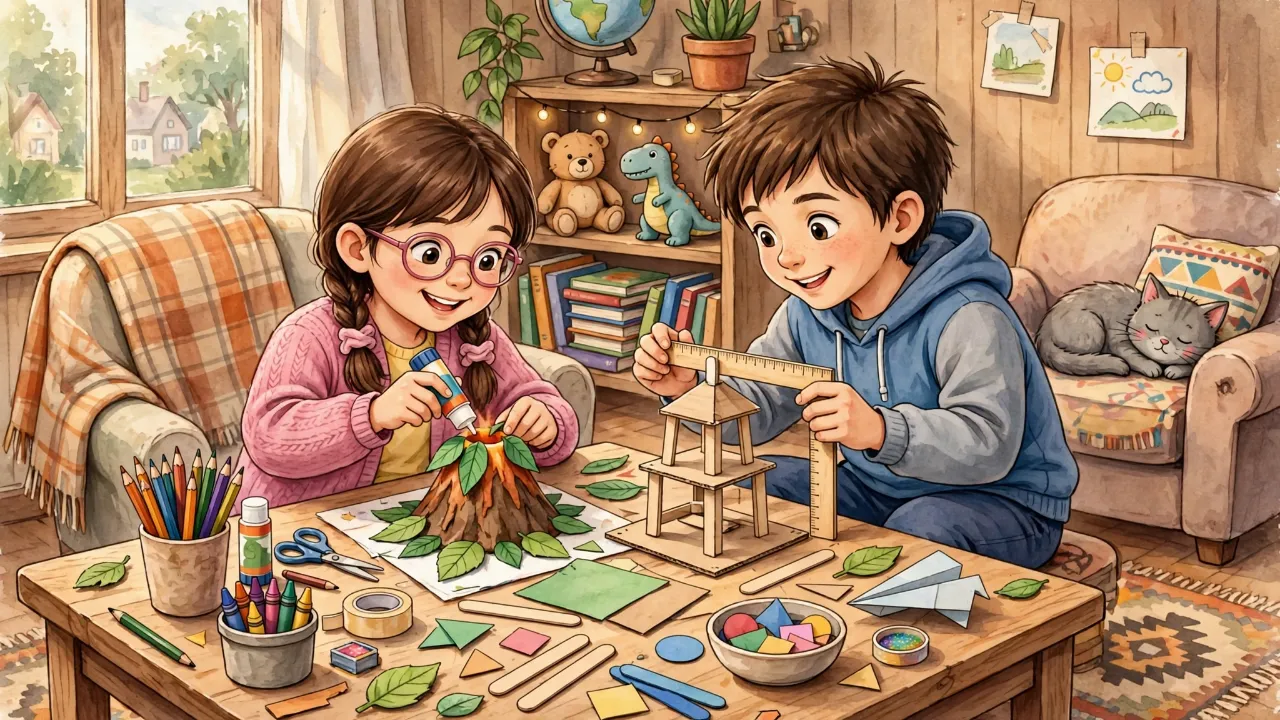
Siblings are your brothers and sisters. They live in your house!
Big siblings can help you. Little siblings need your help. You can play together every day. 💕
Siblings are special friends you get to keep forever! 🏠
What Are Siblings?
Siblings are the brothers and sisters in your family. Some people have one sibling, and some people have lots of them! Some people have no siblings at all.
Why Do Siblings Fight?
Siblings sometimes argue because they share the same space, the same toys, and the same parents. That is normal! Even best friends disagree sometimes.
What Makes Siblings Special?
Siblings grow up together. They remember the same holidays, the same pets, and the same family stories. Nobody else in the world shares those exact memories with you.
Can You Be Like a Sibling?
Some kids feel like siblings even if they are cousins or close friends. What matters most is caring about each other. 💛
Brothers, Sisters, and Everything In Between
A sibling is someone who shares at least one parent with you. That includes full siblings (same mom and dad), half-siblings (one shared parent), and step-siblings (your parent married their parent). About 80% of kids in the United States grow up with at least one sibling.
Birth Order: Does It Matter?
You may have heard that oldest kids are bossy, middle kids are peacemakers, and youngest kids are funny. Scientists call this birth order theory. Some research shows tiny differences in personality, but they are much smaller than people think. Your birth order does not decide who you become.
Why Siblings Fight (and Why That Is OK)
Research says siblings between ages 3 and 7 have a small conflict roughly every 10 minutes when they are together. That sounds like a lot, but most fights last less than a minute. Disagreements actually teach important skills like negotiating, sharing, and seeing someone else's point of view.
The Sibling Bond
The sibling relationship is usually the longest relationship in a person's life, often lasting 60, 70, or even 80 years. That is longer than most friendships and longer than most marriages. Growing up with siblings gives you a built-in partner for learning how to get along with other people.
The Science of Sibling Relationships
Siblings occupy a unique position in human development. Unlike parent-child relationships (which are hierarchical) or friendships (which are voluntary), sibling bonds are both egalitarian and involuntary. You do not choose your siblings, and neither of you holds authority over the other. This combination makes the sibling relationship one of the most complex in human life.
Birth Order: Fact vs. Myth
Alfred Adler, a psychologist working in the 1920s, proposed that birth order shapes personality. Firstborns would be responsible and achievement-oriented. Middle children would be diplomatic. Youngest children would be charming risk-takers. The idea stuck in popular culture for a century.
Modern large-scale studies tell a different story. A 2015 study of over 20,000 people from the U.S., the U.K., and Germany found that birth order had no meaningful effect on personality traits like extraversion, emotional stability, agreeableness, or conscientiousness. There was a small effect on intelligence: firstborns scored about 1.5 IQ points higher on average, likely because they spend more one-on-one time with parents early in life.
Conflict and Cooperation
Developmental psychologists at the University of Illinois found that siblings between ages 2 and 12 experience an average of 3.5 conflicts per hour during shared playtime. That rate drops sharply during adolescence. Conflict frequency is not the issue; conflict resolution style matters far more for long-term relationship quality.
Siblings and Identity
Psychologists have identified a process called sibling de-identification: siblings often deliberately develop different interests, skills, and personalities to carve out their own niche in the family. If your older sibling excels at soccer, you might gravitate toward music, not because you dislike soccer, but because standing out feels important. This process helps explain why siblings raised in the same household can seem remarkably different.
Only Children
About 20% of American families have just one child. Research consistently shows that only children are not lonelier, more selfish, or less socially skilled than children with siblings. The "spoiled only child" stereotype has been debunked by studies spanning decades and multiple countries. Only children do tend to score slightly higher on achievement and intelligence measures, similar to firstborns.
Evolutionary Perspectives on Sibling Dynamics
From an evolutionary standpoint, siblings present a paradox. According to Hamilton's rule of kin selection, you share approximately 50% of your genes with a full sibling, the same as with a parent. This genetic overlap should promote cooperation: helping your sibling survive indirectly helps your own genes persist. Yet siblings also compete directly for finite parental resources (food, attention, investment), creating what Robert Trivers termed parent-offspring conflict extended laterally.
This tension between cooperation and competition plays out across the animal kingdom. Sand shark embryos cannibalize each other in utero. Spotted hyena twins fight violently within hours of birth. By contrast, many bird species show cooperative sibling behavior, with older offspring helping parents raise younger chicks. Humans fall somewhere in between: our sibling relationships blend genuine altruism with strategic competition.
Birth Order: The State of the Evidence
The largest study on birth order effects was published in 2015 by Julia Rohrer, Boris Egloff, and Stefan Schmukle, analyzing data from 20,186 participants across three national panels. Their conclusion: birth order has "no lasting effect on broad personality traits." The small IQ advantage for firstborns (about 1-2 points) appears to be an artifact of family resource dilution rather than anything intrinsic to being born first.
Differential Parental Treatment
One of the most robust findings in sibling research is that parents treat their children differently, and that children are acutely aware of these differences. A meta-analysis by Daniel and colleagues (2020) found that perceived favoritism (not objective differences in treatment) was the strongest predictor of sibling relationship quality and individual adjustment. Children who believe their sibling is favored report more depression, lower self-esteem, and more sibling conflict, regardless of whether favoritism is actually occurring.
Sibling Influence on Risk Behavior
Siblings exert substantial influence on each other's risk behaviors during adolescence. Having an older sibling who uses substances roughly doubles the younger sibling's probability of early experimentation, controlling for parental behavior and peer effects. However, the mechanism is nuanced: it appears to operate through normalization ("my sibling does it, so it must be acceptable") rather than direct encouragement. Conversely, older siblings who model positive health behaviors (exercise, academic effort) create measurable protective effects.
Adult Sibling Relationships
Sibling relationships follow a U-shaped curve across the lifespan. Closeness peaks in early childhood, declines during adolescence and young adulthood (as individuals pursue independent lives), and then increases again after age 40, often accelerating when parents age or die. The death of a parent is one of the strongest predictors of sibling reconnection in adulthood, likely because it removes the mediating figure and forces direct engagement.
Hamilton's Rule: altruism evolves when rB > C
(r = relatedness, B = benefit to recipient, C = cost to actor)
The sibling relationship, stretching from shared cribs to shared inheritance disputes, remains one of the least studied yet most consequential relationships in human psychology. It is the relationship where we first learn to negotiate, compete, forgive, and love someone we did not choose.
The Longest Relationship You Will Ever Have
Ask someone about their most formative relationships and they will typically name parents, partners, or close friends. Siblings rarely make the list, which is remarkable given that the sibling bond is, actuarially, the longest relationship most people experience. A sibling born two years after you will likely be in your life for 70+ years, outlasting every other relationship by decades.
What the Research Actually Shows
Sibling research has undergone a quiet revolution over the past two decades. The field has moved from Adlerian birth order folk psychology toward large-sample, longitudinal studies that paint a more nuanced picture.
Birth order effects on personality are essentially zero. The definitive study (Rohrer et al., 2015, PNAS) analyzed 20,186 participants across three national datasets and found no significant effects of birth order on extraversion, agreeableness, conscientiousness, emotional stability, or imagination. The small IQ effect (~1.5 points for firstborns) is real but trivially small in practical terms. Sulloway's "born to rebel" thesis, while narratively compelling, has not survived replication attempts.
Sibling conflict is normal and often beneficial. Kramer (2010) found that moderate sibling conflict in childhood predicts better peer negotiation skills in adolescence. The key variable is not conflict frequency but conflict resolution quality. Families where parents help children resolve disputes constructively (rather than simply imposing solutions or ignoring conflicts) produce children with stronger social competence. Families where conflicts escalate to physical aggression or chronic verbal abuse show the opposite pattern: increased adjustment problems and relationship difficulties.
Perceived favoritism is more damaging than actual differential treatment. All parents treat their children differently to some degree, and this is often appropriate (a child with ADHD needs different support than a neurotypical sibling). The damage comes when children perceive that differences in treatment reflect differences in love or value. Kowal and Kramer (1997) found that children who understood the reasons for differential treatment showed no negative effects. Transparency matters more than equality.
Sibling De-identification and Niche Picking
One of the most interesting phenomena in sibling psychology is deliberate divergence. Schachter (1982) documented that siblings, particularly same-sex pairs close in age, actively differentiate themselves from each other. If the older child is "the smart one," the younger becomes "the athletic one." This is not random drift; it is strategic positioning within the family system. The implications for parenting are significant: labeling a child (even positively) can constrain their sibling's self-concept.
The Sibling Relationship Across the Lifespan
Cicirelli's (1995) lifespan model describes sibling relationships as following a characteristic trajectory: intense contact and ambivalence in childhood, distancing in young adulthood, and renewed closeness in middle and late life. The catalyst for reconnection is often a parent's illness or death, which simultaneously removes the mediating figure in the relationship and triggers shared grief that only a sibling fully understands.
This U-shaped trajectory has implications for families navigating the "difficult middle" period. The adolescent or young adult who cannot stand their sibling is exhibiting a statistically normal developmental pattern, not a permanent rupture. About 80% of adult siblings describe their relationships as close or very close by age 60.
Blended Families and Non-Traditional Sibling Bonds
The nuclear family model (two biological parents, their shared children) describes fewer than half of American families. Step-siblings, half-siblings, adoptive siblings, and foster siblings introduce additional complexity. Research by Ganong and Coleman (2017) shows that step-sibling relationship quality depends heavily on the age at which families blend: children under 10 at the time of blending develop relationships comparable in quality to biological siblings, while adolescents who gain step-siblings show more variable outcomes.
Adopted siblings show patterns nearly identical to biological siblings on measures of closeness, conflict, and warmth, challenging genetic determinism about family bonds. What appears to matter most is shared daily life rather than shared DNA.
Practical Implications for Parents
The research converges on a few actionable insights: avoid categorical labels ("the smart one," "the difficult one") that constrain identity; explain differential treatment rather than pretending it does not exist; facilitate conflict resolution rather than suppressing or ignoring conflict; and resist the impulse to force closeness during the adolescent distancing phase, which is developmentally normal and typically self-correcting.
Sources
- Rohrer, J.M., Egloff, B., & Schmukle, S.C. "Examining the effects of birth order on personality." PNAS 112(46):14224-14229 (2015).
- Kramer, L. "The essential ingredients of successful sibling relationships." Child Development Perspectives 4(2):80-86 (2010).
- Sulloway, F.J. Born to Rebel: Birth Order, Family Dynamics, and Creative Lives. Pantheon (1996).
- Cicirelli, V.G. Sibling Relationships Across the Life Span. Plenum Press (1995).
- Kowal, A. & Kramer, L. "Children's understanding of parental differential treatment." Child Development 68(1):113-126 (1997).
- Schachter, F.F. et al. "Sibling deidentification." Developmental Psychology 12(5):418-427 (1976).
- Ganong, L. & Coleman, M. Stepfamily Relationships: Development, Dynamics, and Interventions. 2nd ed. Springer (2017).
- Trivers, R.L. "Parent-offspring conflict." American Zoologist 14(1):249-264 (1974).
- Zajonc, R.B. "Family configuration and intelligence." Science 192(4236):227-236 (1976).